
Navigating the Unknown

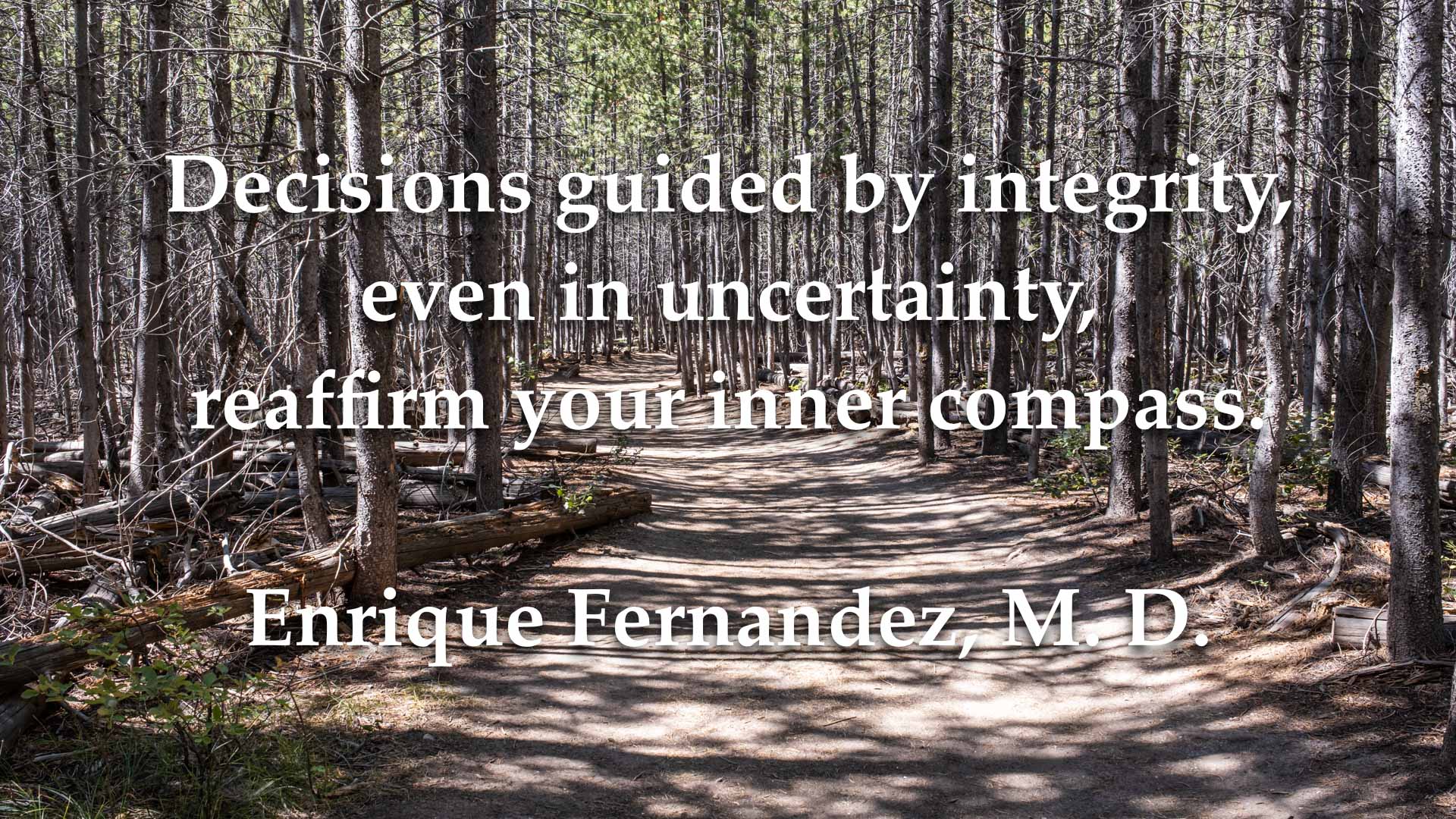
“Path Amidst Obstacles” – 2022
Sierra Nevada, NV
The Nature Of Uncertainty
Uncertainty is the constant companion of every meaningful transition. For those who have spent decades mastering complexity through knowledge and preparation, the absence of certainty can feel unsettling. Yet life’s most significant changes rarely come with a complete roadmap.
The unknown is not simply a void; it is the landscape of possibility. It tests the balance between planning and presence, intellect and intuition. Learning to navigate it well requires a shift in perspective, from control to curiosity. When curiosity replaces fear, the unknown becomes the field from which growth emerges.
The Habit of Knowing
Professionals are trained to value, preparedness, precision and prediction. These attributes build trust, safeguard outcomes, and define competence. However, as one phase of life closes and another begins, those same habits can create tension. When certainty is no longer available, the instinct to overanalyze can replace the ability to act.
The habit of knowing becomes a barrier when not knowing prevents movement. To navigate the unknown, one must learn to step forward without full visibility, trusting in the foundation of experience rather than the comfort of control. You are not beginning from zero; you are beginning from hard earned experience and wisdom.
Finding Confidence Amidst Change and Complexity
The unknown provokes fear because it removes familiar markers of progress. Without measurable results or clear feedback, confidence can waver. Yet fear, when observed rather than resisted, often reveals what matters most. It highlights where values meet vulnerability.
Faith in process restores equilibrium. It means believing that understanding will unfold through involvement, not avoidance. Progress emerges not from immediate clarity but from continued engagement. Each step, however small, builds momentum and insight.
This shift from fear to faith transforms uncertainty from threat to teacher. It encourages you to meet ambiguity with patience, knowing that clarity emerges through purposeful diligence.
The Discipline of Adaptability
Adaptability is both a mindset and a practice. It requires acceptance of change as natural and continuous. Those who adapt well do not discard their knowledge; they apply it to new circumstances. They balance structure with flexibility and analysis with openness.
The discipline of adaptability is strengthened by humility. It recognizes that not every outcome can be engineered and that wisdom often comes from revising expectations. Adaptability is not reaction but recalibration, the ability to adjust course while staying true to purpose.
Each adaptation, no matter how small, reaffirms self-trust. It proves that competence does not vanish when the environment changes; it evolves to meet the moment.
Listening for Direction
In times of uncertainty, silence can be more instructive than strategy. When external signals fade, situational awareness becomes the compass. Reflecting inwardly helps identify what feels aligned and what feels forced.
Direction emerges from discernment, the quiet sense that certain paths are true.. The more you trust this inner orientation, the less dependent you become on external validation. Decisions guided by integrity, even in uncertainty, reaffirm your inner compass. Attentiveness to it converts the unknown from an enemy into an ally. It reveals that intuition and intellect are not opposites but partners in discovery.
The Gift of Perspective
Perspective turns chaos into context. When viewed narrowly, the unknown appears threatening; when seen through a wider lens, it becomes a frame of reference. Every major growth period in life, education, career, leadership, or renewal, is accompanied by ambiguity that can be mitigated by your perspective
Perspective reminds you that uncertainty is temporary, yet transformative. It teaches patience, resilience, and empathy. It reawakens creativity because it demands resourcefulness. Each encounter with the unknown refines skill and reaffirms your character.
The challenge is not to eliminate vainly uncertainty but to evolve with it. Perspective can turn it from disruption into design.
Calm as Competence
The ability to remain calm amidst the unknown is not passive; it requires purposeful practice. Calm is the outcome of trust in preparation, purpose, and adaptability.
Calm supports clarity of thought and steadiness of action. When you embody calmness, those around you have a sense of confidence and safety. In times of transition, calm expresses a powerful element of leadership.
As you progress, keep in mind that the present unknown is not conquered. Rather, it is navigated purposely toward your defined objective.
PS: Would you like to learn more about how to transition successfully from your career? I provide services to physicians, non-medical credentialed professionals, corporate executives, businessmen and entrepreneurs that are tailored to their specific needs. Click here to request an introductory conversation.
If you would like to learn about another way that I can guide you, check out this brief video that describes my unique online course:
The Practice Transition Course for Physicians. TM
 “Light Amidst Darkness” – 2021
Grand Teton National Park, WY

ACCESS FREE GUIDE:
How to Transition Successfully from Your Career -
The Core Concerns
