
On Financial Security and Clarity

“Accumulation” – 2010
Nevada
Aligning Resources With Meaning and Purpose
Financial stability is more than a number; it is a state of mind. For professionals who have lived decades defined by precision, deadlines, and outcomes, money has often been the measure of progress. Yet, in transition, financial clarity becomes something deeper: It is not simply about accumulation, but alignment. True security arises not from the size of resources, but from the confidence that those resources are organized with intention to support your future lifestyle.
At the threshold of transition, many feel uncertainty about what financial stability really means. Does it mean maintaining every aspect of one’s current lifestyle? Or does it mean redefining it? Clarity begins when you shift the question from “Do I have enough?” to “Will my resources support the lifestyle I truly want?” This subtle but critical change reframes money from a defensive necessity into an instrument that supports your aspirations.
The Role of Awareness
Professionals often delegate their financial affairs to advisors or institutions, assuming that expertise alone ensures readiness. Yet genuine readiness requires your personal involvement and understanding. Awareness is not about managing every detail; it is about engaging with the meaning behind the numbers.
Awareness begins with simplicity: knowing where things stand, how they connect, and what outcomes they support. Whether through structured financial planning, estate organization, or purposeful living, this awareness transforms anxiety into assurance. The more you understand your financial landscape, the less it controls you.
Awareness also includes emotional honesty. Finances are not only about logic; they are about legacy, significance, and fulfillment that is accompanied by ongoing personal development. Facing those emotions directly allows you to make decisions from a perspective of clarity. The peace of mind that follows is a key benefit of financial awareness.
Balancing Security and Freedom
For many professionals, the instinct is to preserve rather than evolve. Years of diligence create habits of control: monitoring, saving, protecting. But perceived security without freedom becomes confinement. The purpose of stability is not to prevent change, but to enable it.
This balance requires perspective. Security means ensuring continuity and minimizing unnecessary risk, but freedom means allowing for renewal and exploration. You may find that financial clarity allows you to pursue long-postponed aspirations such as travel, teaching, creating, or mentoring…without guilt. The goal is not to maintain an old lifestyle, but to support the unfolding of a new one.
When resources are viewed through this lens, money becomes a bridge, not a barrier. It supports the manner in which you express your evolving personas that are rooted in how you view yourself…your internal identity.
From Accumulation to Allocation
Accumulation served a purpose during the demanding years of a career. It was the outward sign of inner effort, the validation of work and sacrifice. But accumulation alone does not fulfill. Transition invites a shift from gathering to giving direction: aligning resources with purpose.
Allocation asks new questions: What deserves to be preserved, and what deserves to be released? Which resources now serve meaning as well as maintenance? When you align allocation with values, whether through philanthropy, family support, or creative pursuits, you amplify the significance of wealth into continuity of purpose.
This shift can be profound. It reaffirms that financial stewardship is not just about preservation of capital, but about expression of character. The same discipline that built financial security can now sustain generosity, curiosity, and service…qualities that are elements of your character.
The Emotional Element of Security
Money has a language beyond arithmetic. For many, it represents independence; for others, protection or recognition. During transition, these associations surface more vividly. The challenge is to distinguish the emotional comfort of financial assets with a determination of how they facilitate your desired lifestyle.
In a broader sense, financial security is not achieved by removing emotion, but by integrating it. Reflection replaces worry when you understand that money is a means, not a measure, of worth. The security that follows is emotional before it is numerical.
The most successful transitions happen when individuals feel secure enough to pursue significance blended with well-earned fun. When finances are aligned with values, that focus enlightens what truly matters.
The Freedom of Clarity
Clarity liberates energy. The time and mental space once consumed by uncertainty become available for creativity, connection, and contribution. You begin to see money not as an end, but as an instrument of harmony, between your inner convictions and your outward life.
True financial readiness is not about finality, but fluidity. It is the ability to adapt with grace, to make decisions grounded in understanding rather than fear. When you reach that point, the unknown becomes manageable, and the future, while still uncertain, feels more comfortably manageable.
Financial clarity allows you to move forward with confidence, not because you have planned for every outcome, but because you have aligned your evolving lifestyle with your enduring purpose in life.
PS: Would you like to learn more about how to transition successfully from your career? I provide services to physicians, non-medical credentialed professionals, corporate executives, businessmen and entrepreneurs that are tailored to their specific needs. Click here to request an introductory conversation.
If you would like to learn about another way that I can guide you, check out this brief video that describes my unique online course:
The Practice Transition Course for Physicians. TM
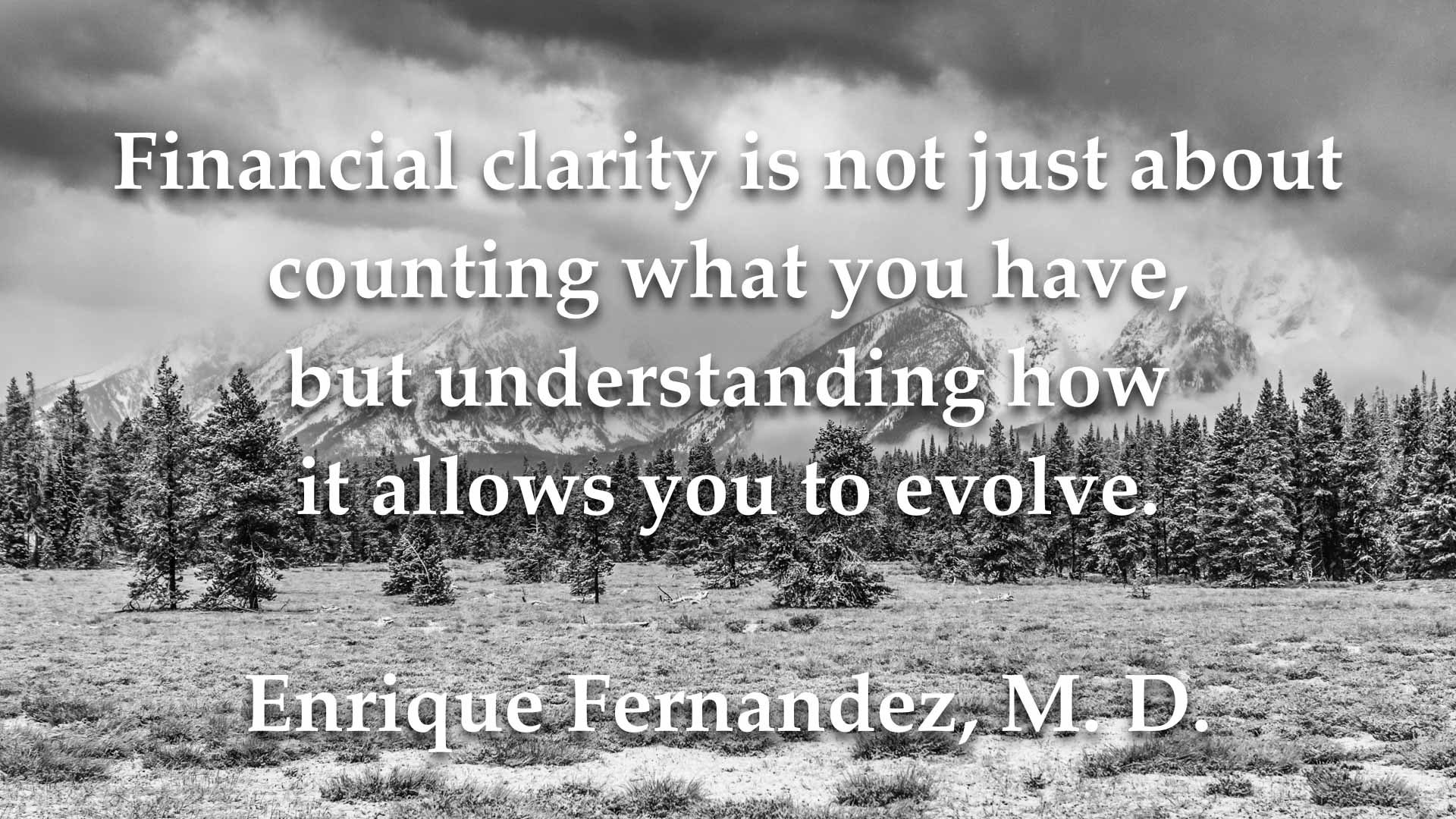
"One More Snowfall" – 2010
Grand Teton National Park
ACCESS FREE GUIDE:
How to Transition Successfully from Your Career -
The Core Concerns
