
Reflecting on Your Career

“Reflecting” – 2022
Swan Lake
Grand Teton National Park, WY
The Mirror of Understanding
Reflection is the bridge between experience and wisdom. Without it, events pass quickly and lessons fade just as fast. With it, even the most ordinary moment can reveal extraordinary meaning.
For professionals who have lived decades immersed in precision and productivity, reflection can feel unproductive at first. It asks for pause rather than progress, stillness rather than speed. Yet reflection is not withdrawal; it is refinement. It transforms the noise of daily experience into the clarity of understanding.
Reflection is how life teaches twice, first through experience, then through insight. It is the process that converts knowledge into understanding and insight into wisdom.
The Difficulty of Pausing
Pausing to reflect feels unnatural to those who have lived by momentum. The instinct to move forward, to solve, to improve, has long been a source of success. Yet constant motion inhibits integration. It is much harder to see the pattern of life if it is unclear.
The difficulty is not in reflection itself but in the need to give oneself the permission to pause to do so. Many professionals equate stillness with stagnation. But , reflection is movement of a different kind, an internal recalibration that restores alignment between values, purposes and actions.
To pause intentionally is to claim ownership of time and apply it diligently to a clear purpose. It empowers you to use it as a tool deliberately and effectively, not not reactively without clear focus.
Reflection as a Form of Leadership
True leadership begins with self-awareness. Reflection allows you to examine not just what you have accomplished, but why. It reveals motivations, assumptions, and patterns that influence behavior.
Those who reflect regularly lead with greater wisdom because they have learned from their own history and have matured. They recognize recurring challenges and respond with insight rather than impulse. Reflection reaffirms judgment by connecting past learning to present decision-making.
Thus reflection is not a luxury; it is an integral discipline of leadership. It creates the humility to grow and summons the courage to change.
Integrating Past and Present
Reflection is not nostalgia; it is integration. It allows the past to inform the present. When you reflect, you bring coherence to the timeline of your life. Experiences that once seemed unrelated begin to reveal congruence.
Integration enhances the nature of memory into a resource for guidance. You start to see that earlier challenges prepared you for current responsibilities, and past disappointments added dimensions to your understanding. Reflection turns fragments of experience into an integral narrative of your purpose.
Professionals in transition often reaffirm their internal identity through this process. When old roles fade, reflection reconnects you to enduring values that remain constant.
Practical Reflection as a Habit
Reflection becomes most valuable when practiced consistently. It does not require hours of meditation or solitude; it simply requires intention and purpose. Writing brief notes at the end of the day, taking quiet walks, or beginning meetings with moments of gratitude can all serve as reflections in motion.
Ask three questions regularly:
- What did I learn today?
- What challenged me, and why?
- What can I carry forward tomorrow?
These questions build awareness that compounds over time. Reflection practiced this manner turns your life experiences into an ongoing journey of personal development.
The Emotional Dimension of Reflection
Reflection is not purely intellectual. It engages emotion as a source of information that complements your intellect. Emotions point to critical concerns such as what you value, fear, or long for. When explored with honesty, they reveal insights that reach their zenith when you are true to yourself.
Allowing emotion into your reflections builds compassion, both for yourself and others. It softens judgment and opens the path to forgiveness. Emotional reflection deepens humanity; it allows personal development not only in skill but in character.
Reflection and Renewal
Every period of transformation demands reflection. It acts as a pause between one phase of life and the next. By looking inward, you clarify what is essential to carry forward and what can be released.
Without reflection, renewal risks becoming repetition. The same patterns simply reappear in new settings. But with reflection, renewal is a form of growth. . You begin to make choices rooted in awareness rather than habits that may no longer serve you well
Reflection transforms transition from a reaction to an evolution with purpose that reflects the nature of your being.
The Timeless Nature of Reflection
Reflection transcends stage, status, and profession. It belongs to all seasons of life. Its value does not diminish with age; it deepens. The more you have lived, the more wisdom reflection provides.
In later phases of life, reflection becomes an adjunct to memory and mentorship. Your stories have enhanced meaning when shared and your wisdom becomes the thread that connects generations.
Reflection is much more than nostalgia; It creates coherence between the timeline of your life and the underlying narrative of your purpose.
Reflection brightens visions of a long life into a luminous one.
PS: Would you like to learn more about how to transition successfully from your career? I provide services to physicians, non-medical credentialed professionals, corporate executives, businessmen and entrepreneurs that are tailored to their specific needs. Click here to request an introductory conversation.
If you would like to learn about another way that I can guide you, check out this brief video that describes my unique online course:
The Practice Transition Course for Physicians. TM
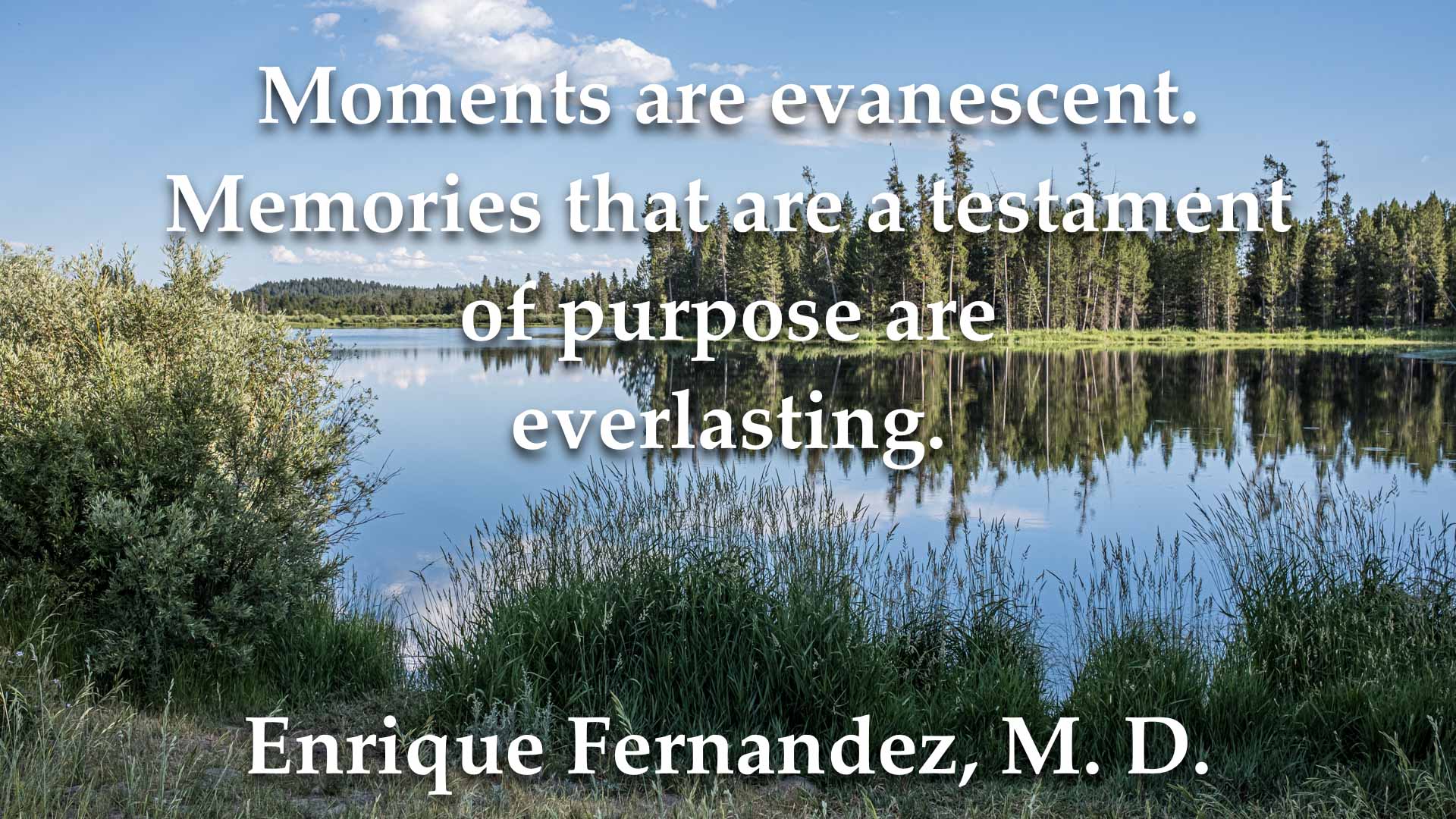 Fish Pond – 2022
Idaho

ACCESS FREE GUIDE:
How to Transition Successfully from Your Career -
The Core Concerns
